
Patient Resources
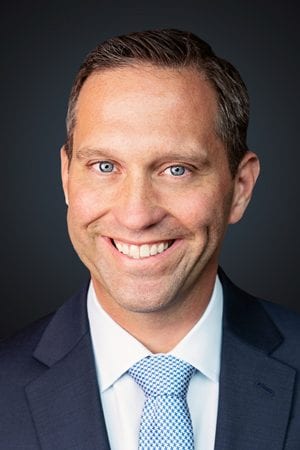
Dr. James Latshaw is a board-certified orthopedic surgeon who has completed fellowship training in advanced shoulder surgery with world renowned Dr. Charles Rockwood. His practice focuses on using the latest advances in orthopedics to treat arthritis, athletic, overuse injuries and fractures of the upper extremity.
Dr. Latshaw attended The Ohio State University for medical school and Residency and went on to fellowship training at The University of Texas Health Science Center at San Antonio for shoulder and elbow surgery. Dr. Latshaw has received many awards for being top doctor of Columbus as well as teaching young minds.
Dr. Latshaw is married with four children and resides in Dublin, they all enjoy sporting events, traveling and spending time together.
Dr. Latshaw has specialized expertise in the following areas:
- Rotator cuff surgery
- Arthroscopic shoulder injuries
- Arthroscopic Bankart and shoulder stabilization procedures
- SLAP repair and treatment of throwing athletes
- Proximal humerus
- Glenoid fracture repair
- Clavicle fractures
- Distal biceps tendon repair
- Proximal biceps tendon repair
- Triceps, Pectoralis repairs
- Shoulder replacement surgery
- Sports Medicine
Click here to view Dr. Latshaw’s presentation from Orthopedic ONE’s 2016 Arthritis CME.
Publications/Research:
Harris, Joshua D., and James C. Latshaw. “Improved clinical utility in clavicle fracture decision-making with true orthogonal radiographs.” International journal of shoulder surgery 6.4 (2012): 130.
Mileti, J, Latshaw, J. “Proximal Humeral Locking Plates in the Treatment of Proximal Humerus Fractures.” The Ohio Orthopedic Society Annual Meeting. 2007
Latshaw, J. “The Effect of Ankle Disc Training in Healthy Subjects on Muscular Strength and Postural Sway” Ohio Physical Therapy Annual Meeting. 1997


Commonly Treated Conditions
- Chronic Elbow Instability
- Radial Head Fracture
- Ulnar Collateral Ligament (UCL) Tear
- Frozen Shoulder (Adhesive Capsulitis)
- Rotator Cuff Injuries
- Shoulder Arthritis
- Shoulder Fractures (Glenoid, Scapula, Proximal Humerus)
Commonly Performed Procedures

Clinic Location
Surgery Location
Education
-
Undergraduate:
The Ohio State University -
Medical School:
The Ohio State University College of Medicine -
Orthopedic Residency:
The Ohio State University Medical Center: Residency in Orthopaedic Surgery -
Fellowship:
Advanced Shoulder Surgery, The University of Texas Health Care Center
Titles, Honors & Awards
-
Awards
Columbus Monthly Top Doctor - Orthopedic Charman DMH 2024
- Castle Connolly Top Doctors
- Orthopedic Chairman RMH (2012-2015)
- Orthopedic Surgery Teacher of the Year (2011-2013)
- The Ohio State University Medical Center Resident Educator of the Year 2007
- The Ohio State University Medical Center Orthopedic Surgery Chief Resident 2006-2007
- J. Hutchinson Award for Academic Excellence in Medical School 2001
- John B. Roberts Award for Orthopedic Surgery-The Ohio State University College of Medicine
- The Ohio State University Medical Center Orthopaedic Surgery Chief Resident
- The Ohio State University Medical Center Resident Educator of the Year
- J. Hutchinson Award for Academic Excellence in Medical School
-
Honors
AOA Medical Honors Society - Alpha Omega Alpha Medical Honor Society
- National Merit Scholar
- Mortar Board Honors Society
Associations
- American Academy of Orthopedic Surgeons (AAOS)
- American Medical Association (AMA)
- Ohio State Medical Association (OSMA)
- Columbus Medical Association (CMA)
- American Physical Therapy Association (APTA)
Research & Teaching
-
Research
Orthopedic ONE's Arthritis CME - Published writer in the medical community including the American Journal of Sports Medicine
Patient Reviews
Related Blog Articles

Ranked #1 in Ohio and Top 5 in the Nation for Orthopedics

A Closer Look at Hand Therapy: What to Expect and Why It Makes a Difference at Orthopedic ONE

From Garden to Golf Course: Protecting Your Hands & Wrists This Spring

Orthopedic ONE Physicians Named Top Doctors®

From Head to Toe: Resolutions for Musculoskeletal Health

Protecting Your Joints: The Link Between Diabetes and Orthopedic Health
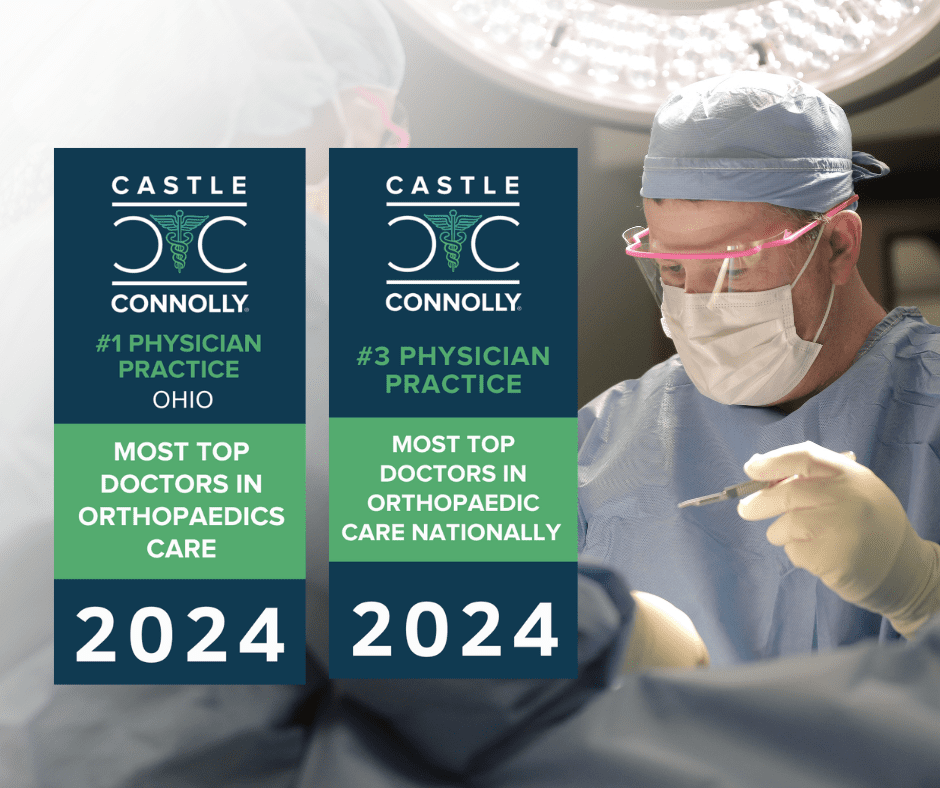
Orthopedic ONE named #1 in Ohio, and #3 in the Nation for Orthopedics
52 ORTHOPEDIC ONE PHYSICIANS NAMED TO COLUMBUS TOP DOCTORS® AND RISING STARS® LIST

ORTHOPEDIC ONE PHYSICIANS NAMED TO COLUMBUS TOP DOCTORS® LIST

An In-Depth Look at Shoulder Instability
Is Outpatient Total Joint Replacement Right for You?
Frequently Asked Questions
What is the difference between an orthopedic foot and ankle surgeon and a podiatrist?
Orthopedic foot and ankle surgeons are doctors – MDs or DOs who have completed four years of medical school, five to six years of surgical residency and an additional year of fellowship training in foot and ankle care. By comparison, a podiatrist (or DPM) is required to complete four years of podiatry school, followed by two years of residency training.
As a result of this rigorous training, orthopedic foot and ankle surgeons are not only well qualified to care for both common and complex foot and ankle issues, but possess extensive knowledge of the entire human body and its relationship to lower extremity issues. While pain may present in your foot, it’s not uncommon for the root cause of this pain to originate in your hips or back. A comprehensive understanding of the body’s entire musculoskeletal system allows an orthopedic foot and ankle surgeon to take the context of your entire health into account when diagnosing and treating problems.
Click here for a complete list of Orthopedic ONE fellowship-trained foot and ankle surgeons.
When should I see an orthopedic specialist?
Consider seeing an orthopedic specialist when pain persists, limits your movement or interferes with daily activities. A specialist can identify the cause and discuss surgical and nonsurgical treatment options. Traumatic bone or joint injuries caused by an accident or fall may require immediate orthopedic trauma and fracture care.
What is the difference between an orthopedic surgeon and a sports medicine physician?
An orthopedic surgeon treats conditions affecting the bones, joints, muscles, ligaments and tendons and can perform surgery when necessary. Sports medicine focuses on preventing and rehabilitating activity-related injuries.
Orthopedic ONE’s sports medicine program includes primary care sports medicine physicians, fellowship-trained orthopedic surgeons, athletic trainers and physical therapists. The right provider depends on the condition and whether surgical expertise may be needed.
Can a torn meniscus heal without surgery?
Not every meniscus tear automatically requires surgery. Orthopedic ONE offers both surgical and nonsurgical treatment options for meniscus tears. A knee specialist can evaluate the location and nature of the injury and recommend an appropriate treatment plan. Learn more about the conditions treated by Orthopedic ONE’s knee specialists.
What are the symptoms of an ACL tear?
An ACL injury can destabilize the knee and may cause instability during sports or everyday activities. Sports such as soccer, volleyball, basketball, and lacrosse place repeated stress on the ACL due to frequent jumping and changing direction. However, ACL injuries are rarely caused by contact and are not limited to competitive athletes. Adults can experience ACL tears during recreational activities, low-intensity sports, and even awkward falls. Because other knee injuries can cause similar problems, an evaluation is needed for an accurate diagnosis. Orthopedic ONE’s sports medicine specialists treat ACL injuries and other activity-related knee conditions.
How do I know if I have a rotator cuff tear?
Lingering shoulder pain or pain that keeps you awake at night may be a sign of a rotator cuff tear, particularly in adults over 40. Tendinitis, bursitis, arthritis and shoulder impingement can also cause pain, so an orthopedic shoulder specialist should determine the underlying cause.
What is the difference between arthritis and a sports injury?
Osteoarthritis is a degenerative condition caused by cartilage breakdown. It can lead to chronic pain, swelling, stiffness and structural changes within a joint. Orthopedic ONE provides joint preservation treatments intended to relieve symptoms and slow joint deterioration.
Sports injuries are generally related to overuse, repetitive activity, collisions or falls. They may include strains, sprains, fractures, dislocations and tendon or ligament tears. These conditions are evaluated through Orthopedic ONE’s sports medicine program.
Can physical therapy help me avoid surgery?
Yes. Physical therapy is often a first-line treatment for musculoskeletal pain and injuries. A treatment plan may include therapeutic exercise, manual treatment, pain-relief techniques, activity changes and injury-prevention education.
For some patients with osteoarthritis, physical therapy and other conservative treatments may help delay or avoid joint-replacement surgery. Learn more about Orthopedic ONE’s approach to joint preservation.