
Patient Resources

Dr. David Hoang is a board certified orthopedic surgeon. His specialties include sports medicine, arthroscopy, joint replacement, fracture care and pediatrics. Dr. Hoang earned his undergraduate degree at the Ohio State University. He then went to medical school at the Ohio State University College of Medicine, and completed his residency at Mount Carmel Medical Center.
Dr. Hoang is certified by the American Board of Orthopedic Surgery. He is a part of the following professional memberships and organizations: The American Academy of
Orthopaedic Surgeons, Columbus Orthopaedic Society, and the Ohio State Medical Association.
Dr. Hoang holds a current professional appointment at the Grady Memorial Hospital in Delaware, Ohio. He is married and has three sons. He is very involved with his sons’ numerous sports activities, and also enjoys exercising in his spare time and is an active member of his church.


Commonly Treated Conditions
Commonly Performed Procedures

Clinic Location
Surgery Locations
Education
-
Undergraduate:
The Ohio State University -
Medical School:
The Ohio State University College of Medicine -
Orthopedic Residency:
Mount Carmel Medical Center -
Board Certification:
American Board of Orthopaedic Surgery
Titles, Honors & Awards
-
Awards
Castle Connolly Top Doctors
Associations
- Columbus Orthopedic Surgeons (COS)
- American Academy of Orthopedic Surgeons (AAOS)
- Ohio State Medical Association (OSMA)
Patient Reviews
Related Blog Articles

Ranked #1 in Ohio and Top 5 in the Nation for Orthopedics

A Closer Look at Hand Therapy: What to Expect and Why It Makes a Difference at Orthopedic ONE

From Garden to Golf Course: Protecting Your Hands & Wrists This Spring

Sitting Pretty: Maintaining Hip Health as a Desk Worker

Orthopedic ONE Physicians Named Top Doctors®

From Head to Toe: Resolutions for Musculoskeletal Health

Protecting Your Joints: The Link Between Diabetes and Orthopedic Health

From Pain to Performance: How Orthopedic ONE Treats Knee Conditions
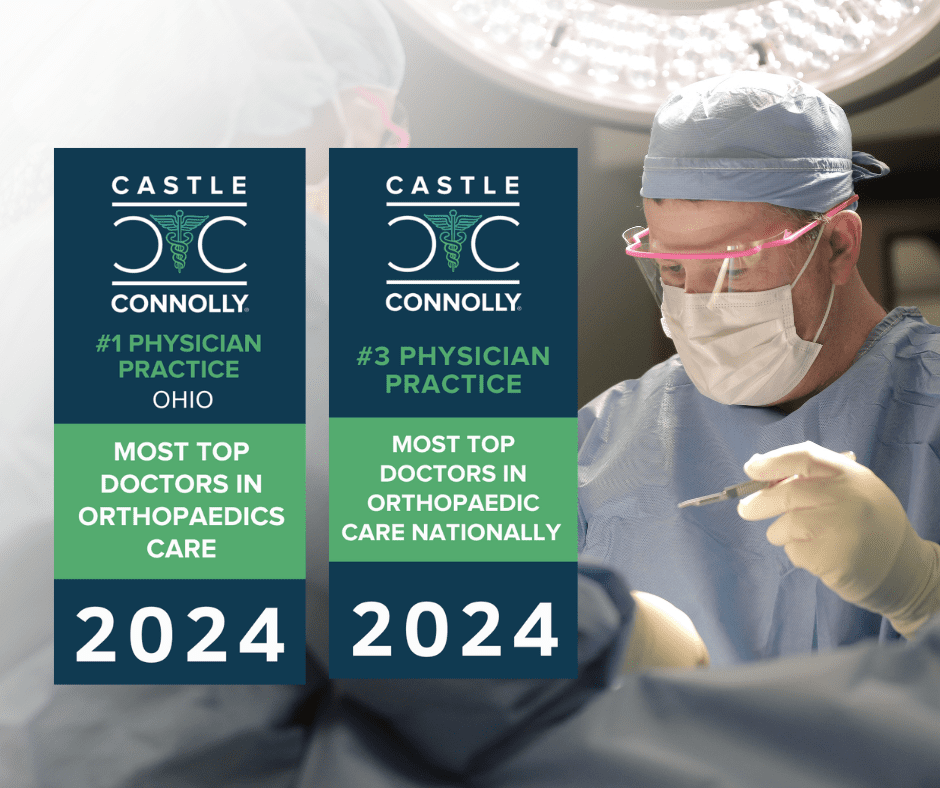
Orthopedic ONE named #1 in Ohio, and #3 in the Nation for Orthopedics

52 ORTHOPEDIC ONE PHYSICIANS NAMED TO COLUMBUS TOP DOCTORS® AND RISING STARS® LIST
Frequently Asked Questions
What is the difference between an orthopedic foot and ankle surgeon and a podiatrist?
Orthopedic foot and ankle surgeons are doctors – MDs or DOs who have completed four years of medical school, five to six years of surgical residency and an additional year of fellowship training in foot and ankle care. By comparison, a podiatrist (or DPM) is required to complete four years of podiatry school, followed by two years of residency training.
As a result of this rigorous training, orthopedic foot and ankle surgeons are not only well qualified to care for both common and complex foot and ankle issues, but possess extensive knowledge of the entire human body and its relationship to lower extremity issues. While pain may present in your foot, it’s not uncommon for the root cause of this pain to originate in your hips or back. A comprehensive understanding of the body’s entire musculoskeletal system allows an orthopedic foot and ankle surgeon to take the context of your entire health into account when diagnosing and treating problems.
Click here for a complete list of Orthopedic ONE fellowship-trained foot and ankle surgeons.
When should I see an orthopedic specialist?
Consider seeing an orthopedic specialist when pain persists, limits your movement or interferes with daily activities. A specialist can identify the cause and discuss surgical and nonsurgical treatment options. Traumatic bone or joint injuries caused by an accident or fall may require immediate orthopedic trauma and fracture care.
What is the difference between an orthopedic surgeon and a sports medicine physician?
An orthopedic surgeon treats conditions affecting the bones, joints, muscles, ligaments and tendons and can perform surgery when necessary. Sports medicine focuses on preventing and rehabilitating activity-related injuries.
Orthopedic ONE’s sports medicine program includes primary care sports medicine physicians, fellowship-trained orthopedic surgeons, athletic trainers and physical therapists. The right provider depends on the condition and whether surgical expertise may be needed.
What causes knee pain when going up or down stairs?
Pain while using stairs may need an individual evaluation because several knee conditions can cause similar symptoms. Orthopedic ONE’s knee specialists diagnose and treat conditions associated with overuse, patellofemoral pain syndrome, patellar tendinitis, muscle strains, ligament sprains, arthritis and cartilage injuries.
Can a torn meniscus heal without surgery?
Not every meniscus tear automatically requires surgery. Orthopedic ONE offers both surgical and nonsurgical treatment options for meniscus tears. A knee specialist can evaluate the location and nature of the injury and recommend an appropriate treatment plan. Learn more about the conditions treated by Orthopedic ONE’s knee specialists.
How do I know if I have a rotator cuff tear?
Lingering shoulder pain or pain that keeps you awake at night may be a sign of a rotator cuff tear, particularly in adults over 40. Tendinitis, bursitis, arthritis and shoulder impingement can also cause pain, so an orthopedic shoulder specialist should determine the underlying cause.
What are the treatment options for knee arthritis?
Nonsurgical treatment options may include personalized exercise, weight management, physical therapy, activity modification, corticosteroid injections and nonsteroidal anti-inflammatory drugs.
Depending on the extent of joint damage, other options may include biologic therapies, cartilage restoration, osteotomy, partial knee replacement or total knee replacement. Orthopedic ONE’s joint preservation specialists work to preserve the natural joint and delay replacement whenever appropriate.
When is a hip replacement recommended?
Hip replacement may be considered when advanced arthritis or significant joint deterioration causes ongoing pain and reduced function. Younger or active patients with early-stage arthritis, labral tears or structural hip conditions may be candidates for treatments designed to preserve the natural joint.
An orthopedic hip specialist can assess the condition and determine whether joint preservation or hip replacement should be considered.